AI Engineering R&D
Exploring human + AI software delivery
ACortex explores how human experts and specialised AI agents can collaborate in an agile delivery flow built around Azure DevOps.
It is a hands-on engineering environment for agent orchestration, distributed systems, governance, evaluation, observability, and human-in-the-loop delivery.














Technology names and logos identify tools explored by this independent project and do not imply sponsorship, partnership, or endorsement.
One research platform. One delivery flow.
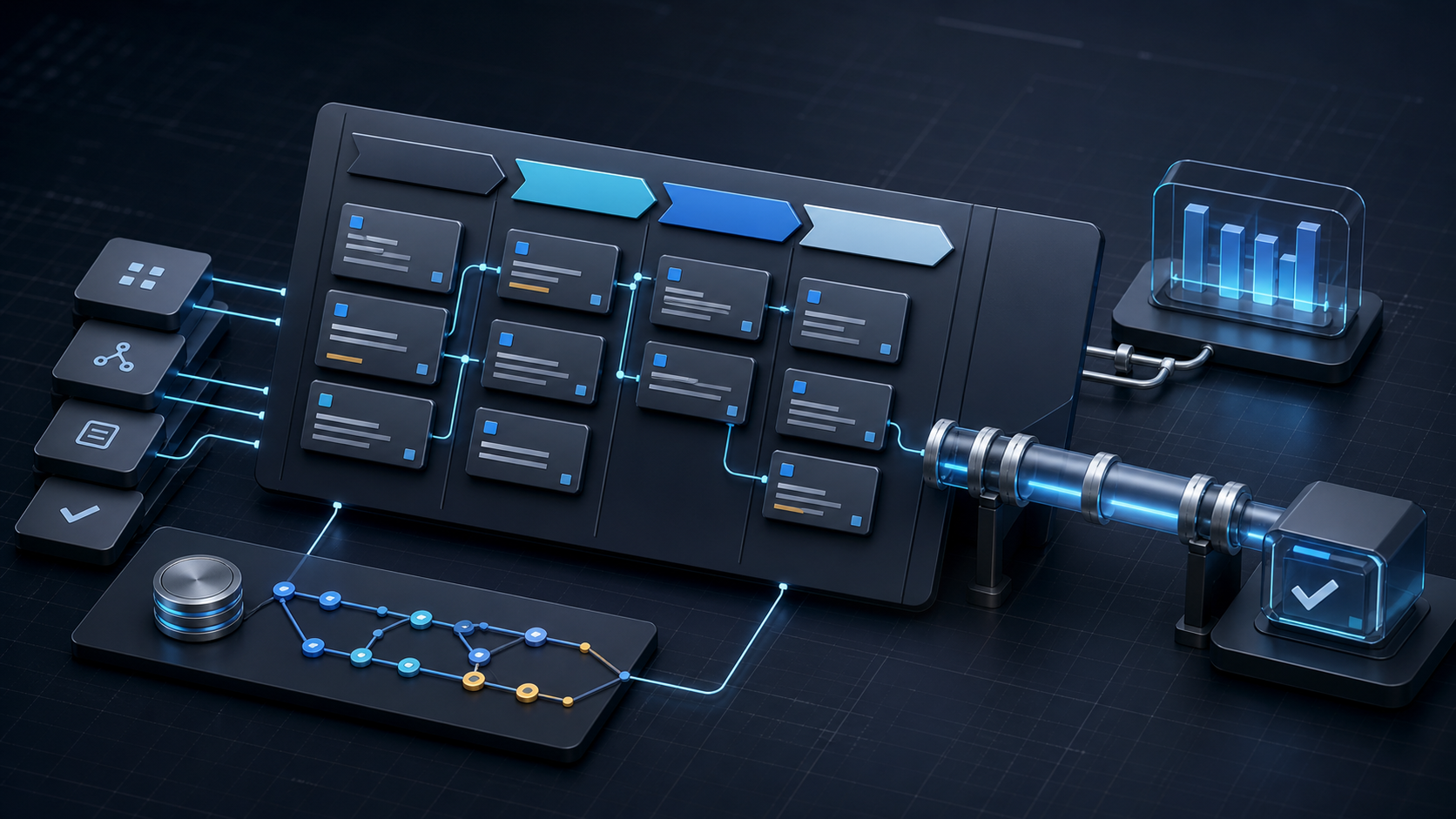
ACortex explores an architecture that connects an Azure DevOps project to a coordinated delivery team of human experts and AI agents.
The prototype models visible assignments, handoffs, approvals, reviews, and dashboards for projects, runs, and agent instances.
The central research principle is that humans set direction and remain accountable while agents assist with repeatable work.
Azure DevOps Connected
Explore how Azure DevOps can remain the source of truth while an agentic layer adds coordination, visibility, and governed automation around it.
Agile Delivery
Model delivery around stories, assignments, handoffs, approvals, and feedback so people and agents can work in the same iterative rhythm.
Specialist AI Roles
Experiment with role-based AI agents for analysis, development, evaluation, and platform operations, each working within defined scope and goals.
Human Control
People remain accountable for priorities, protected actions, approvals, and authoritative quality decisions.
Live Visibility
Prototype project, run, and instance dashboards explore what is active, who owns it, where work is waiting, and the evidence behind each result.
Governed by Design
Research versioned policies, human checkpoints, immutable history, and quality and usage signals that can keep automated work reviewable and accountable.
Research areas and prototype capabilities
ACortex is an experimental software platform used to study the path from an Azure DevOps work item to a reviewed outcome. The areas below describe its architecture, current direction, and capabilities at different stages of design, implementation, testing, and validation.
Azure DevOps integration research
- Connect a test project context to a verified Azure DevOps organisation and project.
- Explore how work items, sprints, repositories, pull requests, and delivery references can form one operating context.
- Keep project identity and source records anchored in Azure DevOps during experimentation.
- Prototype explicit assignments from stories to human specialists or role-based AI agents.
- Model handoffs, waiting states, approvals, and rework as part of the delivery workflow.
- Test whether each activity can remain correlated with its project, work item, contributor, and run.
- Explore traces across runs, steps, tool calls, artefacts, usage, and errors.
- Prototype links between implementation evidence, Azure DevOps stories, and pull requests.
- Evaluate real-time dashboard updates as committed activity is projected.
- Model how protected actions and uncertain outcomes can be routed to a named reviewer or controller group.
- Test approval, rejection, and rework decisions with recorded reasons.
- Study delivery, quality, and usage signals to understand where the flow can improve.
- Experiment with roles, policies, prompts, and team configuration while retaining an audit trail.
Human-AI collaboration research

- Explore human and AI roles for analysis, development, evaluation, and platform operations.
- Prototype capability registration and role-based assignment to activities.
- Test patterns that keep business context, technical judgement, and final accountability with people.
- Prototype views of registered, available, assigned, and active agents and services.
- Explore runtime identity, version, capability, heartbeat, and project-scope information.
- Model the separation between a human-readable team role and its runtime instances.
- Model assignments and accepted or rejected handoffs as durable workflow events.
- Experiment with approval requests to a responsible person or controller group.
- Test resuming work only after a recorded decision reaches the coordinator.
- Explore assessment of agent work by a separate evaluation component.
- Keep experimental automated recommendations distinct from human Accepted, Rejected, or Rework outcomes.
- Investigate extensible agent roles and capabilities without changing project-management concepts.
- Compare models and policies across quality, speed, and cost dimensions.
Governance and observability research
- Prototype views of current work, assignments, delivery status, approvals, and team activity.
- Explore agent and service health, capabilities, workload, and project-assignment signals.
- Evaluate live updates without reproducing the Azure DevOps board.
- Prototype drill-downs into steps, tool calls, artefacts, classified activity, token usage, and errors.
- Study correlation from project and work item through assignment, agent activity, and outcome.
- Research immutable decision and activity history for review and audit.
- Explore independent quality recommendations, supporting evidence, and authoritative human outcomes.
- Prototype versioned governance policies and approval rules for protected actions.
- Study model usage and cost context using configured reference pricing.

Frequently Asked Questions
The purpose, architecture, and technical questions explored by ACortex.
About this project
Built to learn by doing: turning agentic AI concepts into observable, governed, working software.
Why it exists
ACortex turns self-directed study into a substantial engineering challenge: coordinating people and AI agents while preserving context, traceability, quality evidence, and human authority.
The website documents both implemented work and the project's research direction. Some capabilities remain planned or partially implemented as the architecture continues to be tested and refined.
How it is built
ACortex is a personal learning project built independently from first principles. Its architecture, code, and documentation are original work informed by public documentation, open technologies, and hands-on experimentation.
Third-party product names and logos identify technologies being studied; they do not imply a commercial relationship, partnership, certification, sponsorship, or endorsement.